
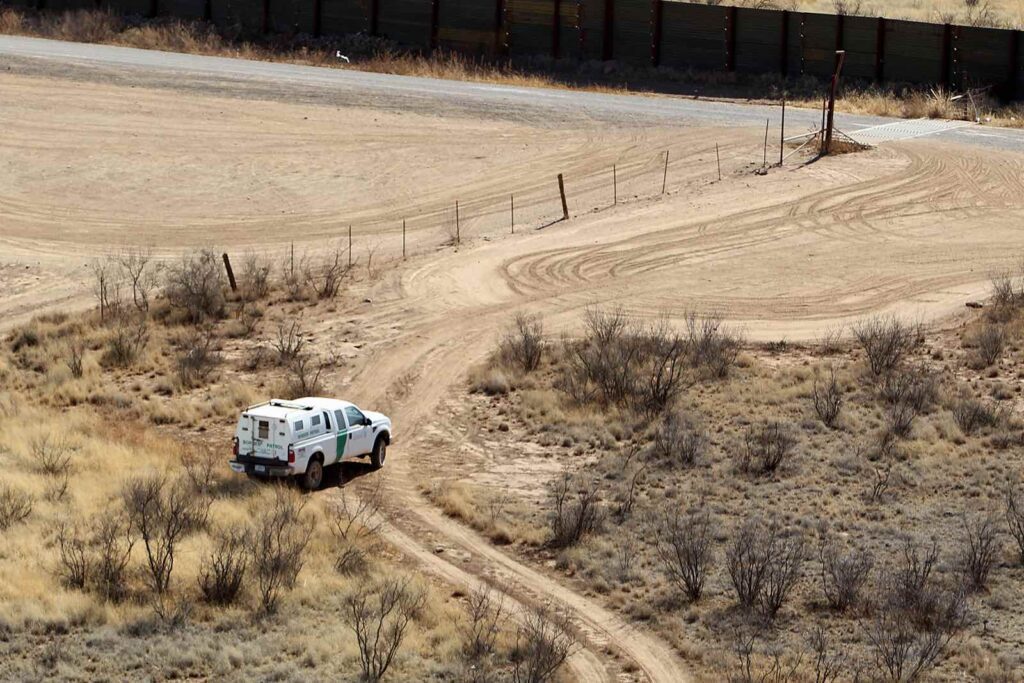
ISIS Fighter Claims Attack Plot Via Mexico, Underscoring Border Vulnerability
By Anne Speckhard & Ardian Shajkovci
The
vulnerability of the U.S. borders to possible exploitation by terrorists—particularly
in light of the heavy migration flow towards our southern border in particular,
through either those posing as asylum seekers or relying on smugglers to move
across undetected—has become a border enforcement and policy concern since at
least 9/11. While the administrations of both President Bush and Obama have
taken a series of executive immigration and border enforcement actions to
respond to the flaws of our immigration and border enforcement system, such as
placing emphasis on deporting individuals considered as national security risks, gang members, and
other dangerous felons[1], a huge controversy erupted,
especially among Democrats, in response to the Trump administration introducing
a number of more restrictive immigration measures, namely the prospect of
building a wall with Mexico and instituting a travel ban against countries from
which terrorists might arrive.
In the past,
terrorists have managed to infiltrate Europe through irregular immigration
routes, such as in the case of the November 2015 Paris and 2016 Brussels
airport and metro attacks.[2] The nature and the extent of such
threats in the United States, including measures put in place to address them,
remains a point of contention for many. For instance, in January 2019, the
White House reported that 4,000 “known or suspected terrorists†were prevented
from crossing into the United States via the U.S.-Mexican border in 2018.[3] A later report disputed such claims
noting that they were based on 2017 data, that the number refers to the total security
stops made by the Department of Homeland Security (DHS) and that these were primarily made at
airports versus at the southern U.S. border.[4] While figures remain speculative, we
have learned in our in-depth research interviews with over 160 ISIS defectors,
returnees and imprisoned ISIS cadres to date about multiple individuals who
knew of, or were themselves offered, or pressured by the ISIS emni
(intelligence) to return to Europe to mount attacks at home. We have not however,
found in our research interviews, until now, any instance of ISIS cadres who
were prepared to be sent by ISIS to attack inside the U.S. This may be because
there were so few Americans who made it all the way to Syria and Iraq, many
being stopped by the FBI before departing country or we simply have not run
across those with such knowledge.
However,
this past May, while finishing up a research interview with a Canadian
imprisoned ISIS cadre detained in Rojava, Syria by SDF forces, we learned that
indeed, there was at least one ISIS plot for their cadres to travel from Syria
to penetrate the U.S. southern border, by  infiltrating migration routes via the U.S.-Mexico
border. Whatever one thinks of President Donald Trump’s heightened rhetoric about
the U.S.- Mexican border and his many claims that it is vulnerable to
terrorists, ISIS apparently also thought so, as knowledge of this ISIS plot came
from the mouth of a now repentant ISIS cadre.
Abu Henricki
al Canadi[5],
a Canadian with dual citizenship with Trinidad, who was detained by the SDF in
Rojava, Syria spoke with ICSVE researchers for about 1.5 hours on May 12, 2019
giving his first-hand account of being attracted to, traveling, joining and
serving in the Islamic State Caliphate, first as a fighter and later designated
as unable to fight due to chronic illness. As we were about to bring the
interview to a close, Abu Henricki suddenly decided he trusted us enough to
unburden himself of something that he claimed had been troubling him for some
time.
“There’s something that’s kind of like was playing in the mind
in the past a little while now,†he told
us. “I have been contacted by two organizations from the U.S. and Canada to
help stop foreign attacks. The one guy in Canada wants to take me under his
wing,†he explained his eyes widening. “Another one [the American intel] wants
me to go around to people I met, Americans from Texas.†That foreign
intelligence also interviews the imprisoned ISIS cadres we talk with and tries
to learn from them, and perhaps also recruit them as informants, is no surprise
to us, as we frequently hear about it from those we have interviewed in SDF and
Iraqi prisons.
“You met
Americans in ISIS?†we ask surprised, as most often our interviewees have no,
or only very sparse information, about American ISIS members.
Nodding, he
answers, “There was a Bengali American. Abu Adam.†Trying to recall the others’
names, he adds, “Two cousins. They were from New York. One was American, but
Turkish—Abu Ilias. He was from Texas. He was killed in Baghouz in a drone
strike.†We ask how he knows for certain this American ISIS cadre was killed,
as ISIS had a habit of declaring cadres they hoped to send back home to attack
as dead—creating an “ISIS undead†attack force of sorts. “I didn’t see his body, but others
did,†Abu Henricki confirms.
Abu Henricki
then opens up about a plot in which he and other Trinidadians were invited to
attempt to penetrate the U.S. borders to mount financial attacks on the
U.S. When asked how this occurred, he
explains, “The emni [ISIS intelligence arm] was inviting us,†which matches
other cases we and others have uncovered, in which the ISIS external emni identifies ISIS
cadres willing to go
home or attack in countries outside the Caliphate.[6] When asked if he can identify the
emni member who invited him, as they routinely wore masks covering their faces,
Abu Henricki answers, “He speaks English. He was Tunisian, maybe. I don’t
know. He approached the guys, and they
approached me. He didn’t come directly to me.â€
This was in the end of 2016. “They, what they will have, what they
wanted to do
basically is they wanted to do financial attacks. Financial attacks to cripple the [U.S.] economy,†Abu Henricki explains. “Apparently, they have the contacts or whatever papers they can get to a false ID, false passports [to send me out for this kind of attack,] he adds. “They have their system of doing it. So that’s maybe the way that I could have gone out with other individuals. It wasn’t me alone. They were sending you to Puerto Rico and from Puerto Rico [to Mexico].â€
“One reason while I was also put in [ISIS] prison in 2016, I was asked to leave [ISIS] to go to America because I’m from that area. Cause they wanted [and] planned to do something and I refused.†Abu Henricki explains. “I refused to do it. That is why also I’m put into [ISIS] prison and been tortured,†he states.
Earlier in
the interview, Abu Henricki had told us about being imprisoned by ISIS at the
end of 2016 and in early 2017, along with his Canadian wife. An hour earlier he
was too afraid to share the real reason, telling us only that he was becoming
disillusioned of the Islamic State and was then accused of being a spy. Abu
Henricki was was severely tormented inside the ISIS prison in Mambij. “They
tortured me,†he explains. “They beat me a lot. [I was] suspended from the
back, standing on my toes, given no food for a few days, water boarded—while blindfolded,
and they put a bag over your head. They found nothing on me, so I was released,â€
Abu Henricki had explained an hour earlier. Abu Henricki’s Canadian wife, who
we know through other sources had openly criticized ISIS was also imprisoned,
but not tortured. However, she heard the torments of others who were, so she
suffered a psychological torture of sorts. After both released, Abu Henricki recounts
that his wife miscarried her pregnancy as a result of distress, and Abu
Henricki went on to get a chronic life-threatening stress-related illness.
Now he is
opening up to us about the whole story of his time under ISIS and the horrific
mission they were trying to force him to undertake. “I knew I went to prison
because I said no [to their offer of an external attack mission,]†Abu Henricki
now explains. “But they wouldn’t say that.â€
When asked about the ISIS plot, he explains, “They
were going to move me to the Mexican side [of the U.S. southern border] via
Puerto Rico. This was
mastermind[ed] by a guy in America.
Where he is, I do not know. That
information, the plan came from someone from the New Jersey state from
America. I was going to take a boat [from
Puerto Rico] into Mexico. He was going to smuggle me in,†Abu Henricki
explains. “I don’t know where I’d end up. Please be advised, I was not willing
to do it,†Abu Henricki adds, wanting to be sure we don’t think he was willing
to attack innocent civilians inside the U.S. “But this is one of their wicked,
one of the plans that they had,†he
explains, “and which I would like to think I foiled the plan by not being
part of it.â€
While Abu
Henricki was told that the aim of the plot was to attack the financial system, as
is often the case, the full details of the plot were not disclosed to him. “All
I could think of was a bombing mission,†Abu Henricki explains to us, his face
becoming deathly serious. Given that the mastermind was from New Jersey, it may
have been aimed at New York financial targets.
When asked
about the others who had been approached, Abu Henricki recalls, “I think they
died. I think they also refused. They were still around [inside the Caliphate],
in late 2017, and then were killed, hit by air strikes,†he explains. “My
Trinidadian [friends] were approached to do the same thing,†he explains. “The
Trinidadians, [like me,] also refused,†he states and lists their ISIS names: “Abu
Rahman, Abu Fukai and Abu Salahi, Abu Ana—all dead. I came in [to the
Caliphate] with them.â€Â When asked how he
knows they are actually dead, as opposed to the “ISIS undeadâ€[7] who still compose a threat to
Western countries, he answers, “Abu Rukiah was hit by a sniper.†Given that the
others were bombed, we ask how he knows they were actually killed. “I was in
the vicinity. I saw their dead bodies and went to their burials,†he confirms.
“They wanted
to use these people [to attack inside the U.S.] because they were from these
areas [i.e. North America and English speakers],†Abu Henricki explains.
Abu Henricki
only recently surrendered, during the spring 2019 Baghouz assault. Sleeping on
the street, under heavy bombardments and starving, he was desperate to get out.
He and another ISIS cadre “found a abandoned van and left. We took a French
woman with us, and anybody we could pick up on the way. We drove to the first
checkpoint where Americans were [and surrendered ourselves,]†he explains.
Abu
Henricki’s opening up about the terror plot aimed at the U.S. may not have
occurred for quite some time if we hadn’t happened upon him for a research
interview, as the Canadian government has a policy of not visiting their
detainees held in Syria. This is because the Canadian government has lost
lawsuits and paid upwards of 50 million Canadian dollars to those detained by
foreign governments for alleged or actual participation in terrorist activities.
For instance, Omar Khadr, a underage Canadian citizen imprisoned in Guantanamo
Bay for allegedly killing an American soldier in Afghanistan, won CA$ 10.5
million in settlement. The Supreme Court of Canada cited that the “actions of
the Canadian Security Intelligence Service (CSIS) and diplomatic officials
during his detention contributed to unjustified violations of Khadr’s right to
life and security. Similarly, a monetary settlement was reached in the case of
Abdullah Almalki, Ahmad Abou Elmaati,
and Muayyed Nureddin for the government’s failure to intervene in the case of
their detention and mistreatment in Syria. While these lawsuits have made the
Canadians averse to visiting their citizens who are detained by the SDF, in failing
to debrief with them, they may be missing valuable information about plots
aimed at the West.
Despite the
Canadian governments overtly stated practices, Abu Henricki claims that he has
been approached by both U.S. and Canadian intelligence since he was imprisoned
in the SDF prison. “I was contacted to get information to stop [active] plots,â€
he explains. Up to now, Abu Henricki has not trusted anyone enough to share his
insider knowledge about this plot. “I
haven’t told anyone this information,†he explains. We thank him for sharing
and tell him that we will share it with the FBI, which we promptly do, as it
relates to national security concerns. “I feel better now,†Abu Henricki says
as he stands to leave, shaking both of our hands. “I’ve been carrying that
inside for a very long time and it feels good now to unburden myself of it.â€
Conclusion
This article
serves to demonstrate that ISIS has discussed and operationalized ways in which
their operatives could infiltrate our borders and cause harm to our citizens.
We also know from our research that ISIS and similar terrorist groups are aware
of our robust homeland security capabilities, which is why they have also
shifted towards motivating and inspiring our citizens at home, primarily
contacting them through the Internet, to act on their behalf. That said, it
would be erroneous—and detrimental to our safety and security—to outright
downplay the potential terrorist threats emanating from our borders, similar to
the Bush administration that cast aside initial warnings about al-Qaeda plots, with
the result of American citizens eventually suffering the 9/11 attacks. These
accounts of the “ISIS undead†reappearing in Western countries to mount attacks
and plots to penetrate our borders are chilling indeed. Yet this account of a Canadian ISIS cadre recently
interviewed under SDF authority in Rojava, Syria is not published here as a
warning bulletin for an imminent attack against our country, nor is it a fear mongering
attempt to suggest that a wave of ISIS terrorists are waiting to cross our
southern border, but a reminder to diligently consider leads and sources that confirm
terrorists’ intentions to exploit one of the weakest links in our national
security—our borders.
About
the authors:
Anne
Speckhard, Ph.D., is Director
of the International Center for the Study of Violent Extremism (ICSVE)
and serves as an Adjunct Associate Professor of Psychiatry at Georgetown
University School of Medicine. She has interviewed over 600 terrorists, their
family members and supporters in various parts of the world including in
Western Europe, the Balkans, Central Asia, the Former Soviet Union and the
Middle East. In the past two years, she and ICSVE staff have been collecting
interviews (n=169) with ISIS defectors, returnees and prisoners, studying their
trajectories into and out of terrorism, their experiences inside ISIS, as well
as developing the materials from these interviews. She has also been
training key stakeholders in law enforcement, intelligence, educators, and
other countering violent extremism professionals on the use of
counter-narrative messaging materials produced by ICSVE both locally and
internationally as well as studying the use of children as violent actors by
groups such as ISIS and consulting on how to rehabilitate them. In 2007, she
was responsible for designing the psychological and Islamic challenge aspects
of the Detainee Rehabilitation Program in Iraq to be applied to 20,000 +
detainees and 800 juveniles. She is a sought after counterterrorism expert and
has consulted to NATO, OSCE, foreign governments and to the U.S. Senate &
House, Departments of State, Defense, Justice, Homeland Security, Health &
Human Services, CIA and FBI and CNN, BBC, NPR, Fox News, MSNBC, CTV, and in
Time, The New York Times, The Washington Post, London Times and many other
publications. She regularly speaks and publishes on the topics of the
psychology of radicalization and terrorism and is the author of several books,
including Talking to Terrorists, Bride of ISIS, Undercover Jihadi and ISIS
Defectors: Inside Stories of the Terrorist Caliphate. Her
publications are found here: https://georgetown.academia.edu/AnneSpeckhard and
on the ICSVE website http://www.icsve.org Follow @AnneSpeckhard
Ardian
Shajkovci, Ph.D., is the
Director of Research and a Senior Research Fellow at the International Center
for the Study of Violent Extremism (ICSVE). He has been collecting interviews
with ISIS defectors and studying their trajectories into and out of terrorism
as well as training key stakeholders in law enforcement, intelligence,
educators, and other countering violent extremism professionals on the use of
counter-narrative messaging materials produced by ICSVE both locally and
internationally. He has also been studying the use of children as violent
actors by groups such as ISIS and how to rehabilitate them. He has conducted
fieldwork in Western Europe, the Balkans, Central Asia, Africa, and the Middle
East, mostly recently in Jordan and Iraq. He has presented at professional
conferences and published on the topic of radicalization and terrorism.
He holds a doctorate in Public Policy and Administration, with a focus on
Homeland Security Policy, from Walden University. He obtained his M.A. degree
in Public Policy and Administration from Northwestern University and a B.A.
degree in International Relations and Diplomacy from Dominican University. He
is also an adjunct professor teaching counterterrorism and CVE courses at
Nichols College.
Reference for this Article: (Speckhard, Anne & Shajkovci, Ardian) June 3, 2019 PERSPECTIVE: ISIS Fighter Claims Attack Plot Via Mexico, Underscoring Border Vulnerability. Homeland Security Today
Endnotes
[1]
Nowrasteh, A. (2018). “ President Trump isn’t breaking immigration arrest
records,†CATO Institute, available
at https://www.cato.org/blog/president-trump-isnt-breaking-immigration-arrest-records
[2]
Brisard, J. (2015). “ The Paris attacks and the evolving Islamic State threat
to France,†Combating Terrorism Center,
available at https://ctc.usma.edu/the-paris-attacks-and-the-evolving-islamic-state-threat-to-france/
Melville-Smith, A (2016). “Two More Men Charged With
Terrorism-Related Offenses Over Brussels Bombings†available at https://www.buzzfeednews.com/article/aliciamelvillesmith/explosions-reported-at-brussels-airport
[3]
Re, G. (2019). “ Pence: WH Counsel actively looking into declaring emergency to
build border wall.†Fox News,
available at https://www.foxnews.com/politics/pence-wh-counsel-actively-looking-into-declaring-emergency-to-build-border-wall
[4]
Ainsley, J. (2019). “ Fact check: Did the U.S. catch 4000 terrorists at the
southern border in 2018?†NBC News,
available at https://www.nbcnews.com/politics/immigration/fact-check-did-u-s-catch-4-000-terrorists-southern-n954796
[5]
His name has been changed at his request.
[6]
Speckhard, A. & Shajkovci, A. (2019) ISIS Smuggler Sleeper Cells and Undead
Suicide Bombers have Infiltrated Europe? The
Daily Beast https://www.thedailybeast.com/isis-smuggler-sleeper-cells-and-undead-suicide-bombers-have-infiltrated-europe?ref=author
[7]
Speckhard, A. & Shajkovci, A. (2019) ISIS Smuggler Sleeper Cells and Undead
Suicide Bombers have Infiltrated Europe? The
Daily Beast https://www.thedailybeast.com/isis-smuggler-sleeper-cells-and-undead-suicide-bombers-have-infiltrated-europe?ref=author