
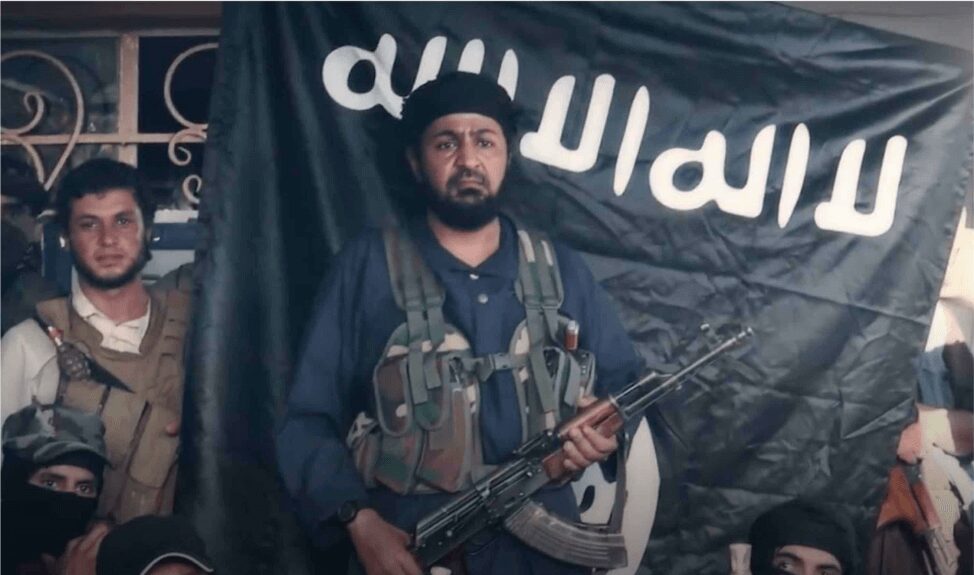
ISIS in Their Own Words
ICSVE is proud to announce our newest publication in the Journal of Strategic Security
by Anne Speckhard and Molly Ellenberg
From
2015 to 2019, Dr. Anne Speckhard interviewed 220 Islamic State of Iraq and
Syria [ISIS] defectors, returnees and imprisoned cadres in Turkey, Iraq, Syria,
the Balkans, Europe and Central Asia. During these in-depth interviews, Dr.
Speckhard examined the demographics, psycho-social vulnerabilities and
motivations for joining ISIS, in addition to the influences and recruitment
patterns that drew them to the group. Moreover, Dr. Speckhard inquired as to
the interviewees’ roles, experiences and relationships within ISIS, variance in
their will to fight and support violence, disillusionment and attempts to
leave.
This
study’s sample of the first 220 (out of 239 to date) consisted of 182 men
of 41 ethnicities, representing 35 different countries, and 38 females of 22
ethnicities, representing 18 countries. 51.1% of the men and 76.3% of the women
were foreign members of ISIS, some who traveled to live under ISIS, and a few
who engaged in ISIS recruitment or other activities, including planning
attacks, in their home countries. The participants were primarily young and
middle class. Most were raised Sunni Muslim, whereas others reverted or
converted before joining ISIS. The participants had vast variation in their
educational levels and socioeconomic statuses, thus representing the broad
range of people from all over the world who have joined ISIS.
The
most common vulnerabilities to ISIS recruitment for the entire sample were
poverty, unemployment and underemployment. Breaking it out by gender, the most
common vulnerabilities were a criminal history for men and poverty, family
conflict, and prior trauma for women. Poverty and unemployment tended to be
much more influential for Iraqi and Syrian ISIS members, who joined the group
after it took over their villages, whereas foreign participants had more
complex vulnerabilities, such as the combination between a criminal history and
substance abuse, and viewing un-and under-employment as a consequence of
discrimination over being Muslim and/or from an immigrant background.
For
men, the most common influences to joining ISIS were friends, face-to-face
recruiters, and passive viewing of videos on the Internet and social media. The
majority of participants were influenced in some way online, and a significant
minority reported that all of their recruitment occurred online. For
women, the most common influences were spouses, Internet recruiters, and
parents. This can be expected due to the greater tendency for women to make
decisions based on the preservation of relationships, particularly with their
parents and spouses. While many women followed their husbands to ISIS out of
fear of emotional or financial abandonment, only three women credibly claimed
that they did not know where they were going when they left their home
countries for ISIS territory—although many men and women had no idea it would
be as bad as it was.
Motivations
for joining ISIS differed drastically by location. Foreign males tended to be
motivated by a “helping†purpose to provide humanitarian and defensive militant
aid to the Syrian people, whereas foreign women tended to be motivated by the
desire to pursue an Islamic identity, which many felt was not possible in their
home countries due to harassment and discrimination. European women were also
motivated by family ties, meaning that they followed their parents or husbands.
Local men and women were motivated less by ideology and higher goals and more
by employment, fulfilling basic needs and personal and familial safety.
Men’s
roles in ISIS were extremely varied. 51.6% of the men admitted to serving as
fighters, ribat (border patrol), or both, during their time in ISIS. It
is likely that many more of the men were fighters but did not want to
incriminate themselves by admitting it. Other commonly reported jobs were
engineers, mechanics, and medical personnel. 97.4% of the women claimed to have
acted as wives and mothers. The roles of suicide terrorist, face-to-face
recruiter, and medical personnel were endorsed by one woman each in the sample.
Additionally, two women reported being members of the hisbah, ISIS’s
brutal morality police.
The
most commonly endorsed sources of disillusionment among men were mistreatment
of civilians, lack of food, and mistreatment of women, although ISIS’s
mistreatment of women was not reported to be as powerful as a disillusioning
influence as mistreatment of ISIS members. For women, the most common sources
of disillusionment were mistreatment of women, lack of food, and the acts of
ISIS attacking outside their territory—particularly back home.
The
participants reported experiencing, witnessing, and committing atrocities during
their time in ISIS. Men most commonly reported experiencing bombings, being
imprisoned by ISIS and being tortured, while women most commonly reported
experiencing bombings, being widowed by ISIS-related violence, and being forced
into marriage. The men most commonly reported witnessing executions, executed
corpses, and torture, and hearing about the killing of a family member, while
women most commonly reported witnessing executed corpses, torture and the death
of a family member, as well as hearing about a family member being killed in
battle or in bombings. Despite Dr. Speckhard’s warning not to self-incriminate,
some men admitted to killing on the battlefield, performing beheadings, other
executions, and torture. One man admitted to owning a slave. One woman admitted
beating, flogging, and biting as a member of the ISIS hisbah.
The
will to fight describes the motivation cited by ISIS fighters for why they went
to battle for ISIS, oftentimes after they were already disillusioned. Commonly
reported wills to fight included fighting the Syrian regime, being a “true
believer†in ISIS’s ideology and hope to build the Caliphate, and fear of the
brutal punishments meted out by ISIS if they refused to fight.
The
results of this study demonstrate the utility and validity of qualitative
interview-based research with terrorists. From the stories of the participants’
experiences in ISIS, it is clear that most FTFs living far from ISIS territory
are motivated more so by a desire to solidify their identities and help the
greater Muslim community than for economic purposes, although some were
attracted by the ISIS promises of free housing, jobs, marriage, etc. FTFs were
also responding to push factors at home including marginalization and
discrimination. In contrast, these existential motivations are less important
for those living in conflict, who felt pressure to join ISIS in order to secure
food and some semblance of safety for themselves and their families. Thus, the
risk of former ISIS members rejoining the group if they are released or escape
from SDF detention where many are held, even if they have been disillusioned
with much of ISIS’s ideology and methodology, should be a serious concern for
military and intelligence personnel. Moreover, the threat of FTFs returning to
their home countries should be countered through deradicalization and
rehabilitation programs that address the vulnerabilities, influences, and
motivations that drove them toward ISIS in the first place, as well as the
traumas that they experienced while living under ISIS.
The complete report of ISIS in their Own Words is
published in the Journal of Strategic Security and can be viewed here.
About the authors:
Anne Speckhard, Ph.D., is Director of the International Center for the Study of Violent Extremism (ICSVE) and serves as an Adjunct Associate Professor of Psychiatry at Georgetown University School of Medicine. She has interviewed over 700 terrorists, their family members and supporters in various parts of the world including in Western Europe, the Balkans, Central Asia, the Former Soviet Union and the Middle East. Over the past five years she has made interviews (n=239) with ISIS defectors, returnees and prisoners, studying their trajectories into and out of terrorism, their experiences inside ISIS, as well as developing the materials from these interviews. She has also been training key stakeholders in law enforcement, intelligence, educators, and other countering violent extremism professionals on the use of counter-narrative messaging materials produced by ICSVE both locally and internationally as well as studying the use of children as violent actors by groups such as ISIS and consulting on how to rehabilitate them. In 2007, she was responsible for designing the psychological and Islamic challenge aspects of the Detainee Rehabilitation Program in Iraq to be applied to 20,000 + detainees and 800 juveniles. She is a sought after counterterrorism expert and has consulted to NATO, OSCE, foreign governments and to the U.S. Senate & House, Departments of State, Defense, Justice, Homeland Security, Health & Human Services, CIA and FBI and CNN, BBC, NPR, Fox News, MSNBC, CTV, and in Time, The New York Times, The Washington Post, London Times and many other publications. She regularly speaks and publishes on the topics of the psychology of radicalization and terrorism and is the author of several books, including Talking to Terrorists, Bride of ISIS, Undercover Jihadi and ISIS Defectors: Inside Stories of the Terrorist Caliphate. Her publications are found here: https://georgetown.academia.edu/AnneSpeckhard and on the ICSVE website http://www.icsve.org Follow @AnneSpeckhard
Molly Ellenberg is a Research Fellow at ICSVE, working on coding data from qualitative interviews, developing trainings for use with the Breaking the ISIS Brand Counter Narrative Project videos, and assisting with the creation and analysis of the Facebook campaigns.